
Bops, Boundaries, and Better Screen Time Habits

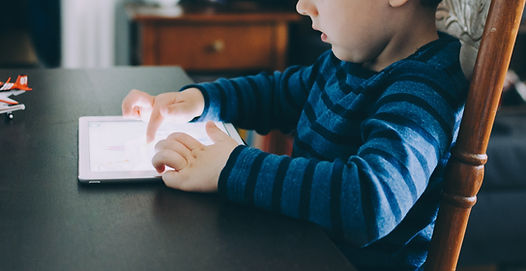
Every parent with a child under the age of 13 dreads these two words: Screen time.
Screen time (tablet, television, computer screen or mobile device) has been linked to decreased language skills and decreased focused attention. The reality is that it can significantly impact our kiddos development in many areas. Even reading to your child on an e-reader (something you'd think would be a great use of screen time) can lessen child-parent interactions. The truth is that we live in a world saturated with screens. It can be difficult to manage as an adult, let alone manage it for our (sometimes very demanding) children. Fortunately, there are some ways we can reduce the impacts of screen time.
Much like teaching your child to emotionally regulate through co-regulation, you can create a better screen time experience by co-watching. This would look like a grown up commenting on what is happening on screen, connecting the events on screen to real life experiences and singing along whenever a song comes on. Why not throw in a little dance while we're at it? Some of those theme songs are total bops (are the kids still saying bop?).
Already co-watching your child's preferred show every other day? Great! Time for step two: Looking at your own screen time use. If you’ve ever caught yourself scrolling your phone while your kid is trying to get your attention, well, join the club. But research is showing that our screen time habits can quietly shape those of our kiddos in big ways. When devices interrupt playtime or everyday moments (“technoference”), kids are more likely to act out, seek attention, or rely on screens themselves for comfort. Over time, using screens as a quick-fix for boredom or meltdowns can make it harder for our little ones to learn to self-sooth and emotionally regulate. Higher screen time in preschoolers has also been linked to more behavioural challenges (internalizing), lower self-control, and even struggles with social skills and learning. Some studies even suggest that early heavy screen use may affect things like attention, executive function, and emotional development in the long term. Especially when kids watch alone or for long stretches.
I don't want you to leave here feeling guilty, but try to remember that those small, everyday interactions like playing, talking, and being present in the moment are doing a lot of heavy lifting for your child’s development.
Finally, I know the toddler years are rough. It is so hard not to give in to the tantrums and the emotional ups and downs of your little one wanting the blue cup that still has yesterdays milkshake in it instead of the orange one you just gave them. But setting consistent (this is key) boundaries around screen time and confidently and calmly saying no when they ask for the 12th time will benefit you and your kiddo in the long run.
I highly suggest giving this article a read if you want to learn more. Here is a quote:
Studies have found that parents’ comfort level with saying ‘no’ to their children’s requests for screen time, along with their own media-related beliefs, intentions, and attitudes, are key components of constructive, positive limit-setting. For children—and parents—off-screen time is critical for developing essential life skills such as self-regulation, creativity, and learning through physical and imaginative play.
I hope you leave this feeling empowered to make the right choice around screen time for your family.
May your blue cup always be clean,
Tessa


Comments